5 أشهر

Mr Nobody Against Putin – the sinister truth about brainwashed Russians
الأربعاء، 8 أبريل 2026
Loading ads...
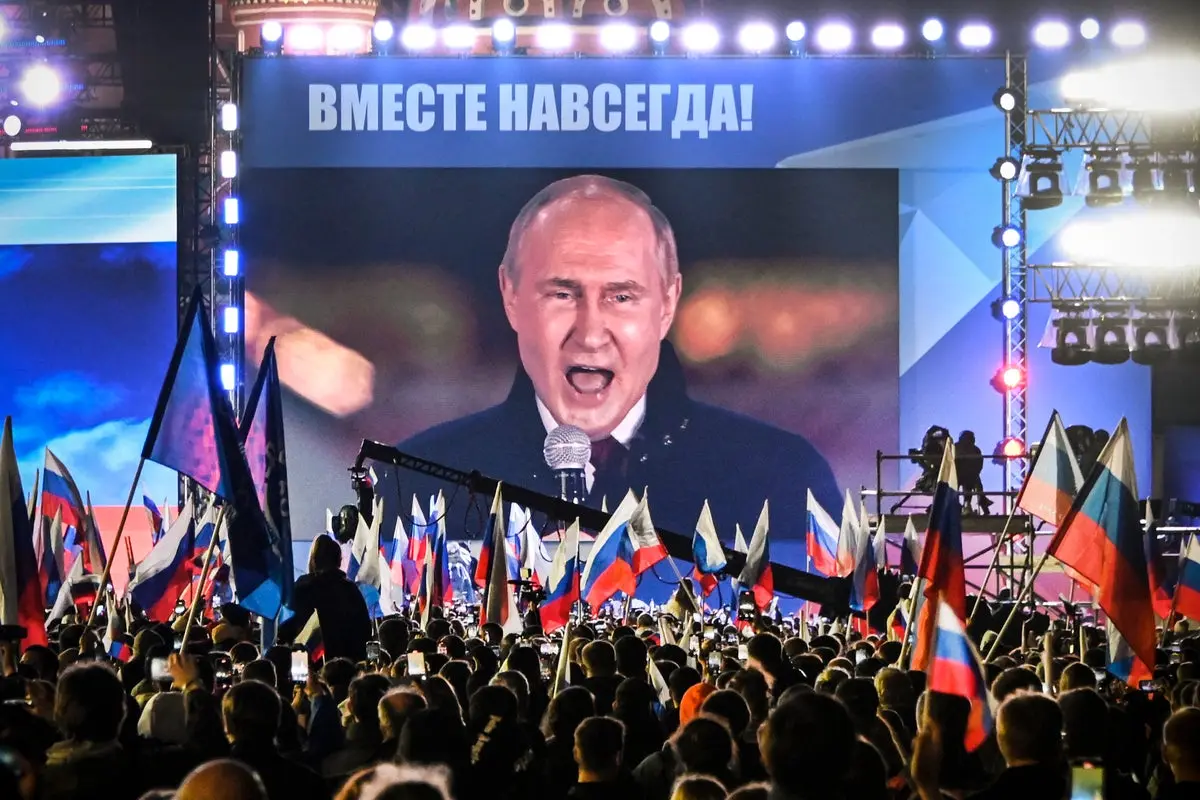
One measure of a documentary film’s merit is how and why its critics hate it. Mr Nobody Against Putin, which has just won an Academy Award for best documentary feature, is a remarkable testimony of how one provincial Russian school was transformed by war propaganda filmed by one of the teachers at his own workplace. The Kremlin hates it because of its powerful anti-regime message – and Russia’s official news agency, RIA Novosti, simply left out the documentary category altogether as it reported the Oscars results. Many Ukrainians hate it because they believe it humanises ordinary Russians and creates a misleading narrative of “good Russians” who oppose the Putin regime.“The ordinary people who stand up to dictators are the Ukrainians who enlisted,” writes Kyiv-based literary translator Iaroslava Strikha, complaining that Ukrainian filmmaker Mtislav Chernov's “stunning and heartbreaking” documentary 2000 Meters to Andriivka didn't even get a nomination while “this farce about ppl who cheer on fascism and do f**k-all to stop it gets lauded.”And some anti-Kremlin Russian exiles hate it because it presents a distorted, orientalising view of the reality of life in Putin’s Russia. “The director says this is a film about love, about love for one’s homeland, for one’s people, for one's city,” says Ilya Ber, a fact-checker and creator of the “Verified.Media” project who fled Moscow for Estonia after Putin’s invasion in 2022. “But I believe Pavel Talankin made this film about love for oneself, one who’s different from everyone else, braver and more talented.”Talankin, the film’s protagonist, spent most of his life at School No. 1 in Karabash, a small industrial town in Russia’s Urals. Employed as an events coordinator at the high school he once attended, Talankin filmed the formal and informal life of the school and ran clubs for the pupils. In the aftermath of Russia’s invasion of Ukraine, the school is ordered to implement a new “patriotic” curriculum designed to justify the war and increase loyalty to the state.Talankin films students competing in grenade-throwing contests, as well as lectures, labelling regime critics as parasites and foreign agents. Wagner mercenaries are brought into school assemblies to teach children how to identify landmines and survive losing limbs. Teachers struggle to learn scripts for state-mandated weekly “Talks about Important Things”, which cover the supposed de-nazification of Ukraine and vigilance against traitors. Through a web-post seeking documentary footage, Talankin connects with a Western filmmaker working for BBC’s Storyville. He agrees to continue filming even as his former pupils join up for Putin’s “Special Military Operation” – and return home in body bags. The film’s most powerful scene is at the funeral of one of his dead former pupils, where Talankin records the bereaved mother’s heartbreaking sobs. The film “is not just about Russia,” says former jailed oligarch Mikhail Khodorkovsky, now based in London, whose foundation partly funded Mr Nobody. “It is a warning about what happens when institutions teach children that killing is normal, and when silence, adaptation, and self-censorship become habits rather than choices.”That’s all true. Mr Nobody is a unique insight into ordinary Russian life in wartime, as well as into how the Kremlin manipulates its people and shapes the younger generation’s world view. But the film’s most serious flaws are deliberate sleights of hand by the Western directors designed to put a sinister slant on events that aren’t, in fact, particularly menacing.The school’s hatchet-faced history teacher emerges as the one true fanatic of the new Putinist order in the school, teaching his pupils about the West’s plan to conquer Russia. When this teacher is pictured waving a metal detector over pupils as they dutifully stand in line to go into the assembly hall, it’s depicted as a sign of the new authoritarian times.“Since last year, there’s no longer any freedom to be found here,” intones the narrator. But the truth is that the kids are going in to sit their EGE final exams, and scanning them for hidden electronic devices has been standard operating procedure in Russia since 2014. There’s another scene where school kids in Soviet-style Young Pioneer caps are filmed marching and singing in a militaristic manner. But what isn’t obvious to non-Russian viewers is that the song they’re marching to is ”A Star Called Sun” performed by legendary dissident Soviet rock star Viktor Tsoi. It’s a pacifist protest song about the Afghan war. Talankin is shown hiding hard disks with video footage behind the wallpaper in his apartment, supposedly in case his apartment is searched. How to ”smuggle out” the disks when Talankin leaves Russia is developed as a dramatic plot point. But in an era of cloud computing, that makes no sense (especially as the school’s state-funded audio visual department is full of high-tech equipment, including two high-spec video cameras, and a steadycam rig). A police car parked in his courtyard is framed as the sinister signal that he is somehow under surveillance. But at no point is there any evidence that Talankin is ever in any actual danger from the authorities, even while he’s making his opposition to the war public. For the most part, Talankin’s colleagues don’t care much about his small acts of protest. When he plays Lady Gaga’s version of “The Star Spangled Banner” instead of the Russian national anthem at a school assembly, the authorities just roll their eyes. Then there’s the unexplained story of the cameraperson who shot much of the footage of Talankin, who spends about half the film in front of the camera, not behind it. Since most of these shots are of school activities, student parties and the sendoff of one of Talankin’s students to the army, we can assume this (very talented) cameraperson is probably a pupil or former pupil. And because this person is uncredited, it’s also reasonable to assume that they’re still in Russia, indeed, maybe in Karabash. If their life and liberty were truly in danger, as the film suggests Talankin’s is, the BBC would have made very sure to buy him or her a ticket out. But their continued anonymity suggests that neither the cameraperson nor the producers saw any risk. That contradicts the film’s heavy-handed picture of state surveillance, footage smuggled out of the country and strict totalitarian control. The picture that emerges is not really of Putin’s Russia as a terrifying dictatorship, but something even more disturbing. It’s closer to the banality of evil. The real value of the film is to portray how ordinary people who really don’t care much about war, or patriotism, or politics in general, make daily compromises. Conformity, an unwillingness to rock the boat, frank cowardice - all the people around Talankin are, in various ways, living examples of how indifference and peer pressure can become the building blocks of totalitarianism. The whole project is a one-way ticket to exile, not because Mr Nobody actually does anything against Putin, but because he dared to document the small ways in which a society moves towards militarism. “Mr Nobody was about how you lose your country through countless small little acts of complicity,” co-director David Borenstein, an American living in Denmark, told the Academy, turning the film’s message towards a US audience. “You lose it … when a government murders people on the streets of our major cities. When we don't say anything when oligarchs take over the media and control how we can produce it and consume it. We all face a moral choice.”The tragedy of Mr Nobody – and the reason why so many Ukrainian viewers were so irritated by it – is that what it documents is not defiance but compliance. Talankin may indeed be against Putin, but all he can do now is join a community of like-minded Russian exiles abroad. Borenstein claimed the film showed that “even a nobody is more powerful than you think”. But the real, and depressing, message is that inside Russia, pretty much nobody is against Putin.
لقراءة المقال بالكامل، يرجى الضغط على زر "إقرأ على الموقع الرسمي" أدناه
اقرأ أيضاً