5 أشهر

How Romanian became Britain’s second most spoken foreign language
الجمعة، 1 مايو 2026
It used to be a secret code that I shared with my half-Romanian daughter. We could talk freely on the tube and people had no idea what we were saying. Not anymore. Romanian is now the second most-spoken foreign language in the UK and second only to English in London, with massive communities in Harrow, Enfield and Stratford. I hear it everywhere I go. The last time I gave blood, the man next to me was Romanian. My dentist’s assistant is Romanian. The leader of the parents’ group at our primary school? Romanian. Emma Raducanu’s dad is Romanian; Oti Mabuse’s husband, dancer Marius Iepure, is Romanian.
But for the most part, the size of the Romanian diaspora – 1 million plus – goes unnoticed. Unlike the proud Poles, always quick to remind you they are from central Europe, who’ve had a community and associations with Britain since the Second World War, the Romanian story in the UK is more recent and fraught. Poorer than Poland, with a more challenging start in the free world post-1989, thanks to a darker past under communist dictator Nicolae Ceaușescu, Romania was for too long the whipping boy of Europe.
Latecomers to the EU party in 2007, their diaspora spread rapidly across Europe, first into Italy and Spain, where the majority live. They arrived in huge numbers from early 2014 when transitional restrictions were lifted and anti-migration attitudes had hardened.
Caught in the ugly crosshairs of Brexit, the vast majority of arrivals to the UK became all too good at hiding in plain sight. Unlike the Poles with their “Polski sklep” grocery outlets, Romanians were much more shy about advertising their presence. Can you blame them? Damning tabloid headlines cast them as “lesser Europeans” and focused exclusively on their poorest, most visible minority. The damage done was lasting. Only now, nearly 15 years later, are the Romanians in the UK finding their voice, and it is a beautiful one – Latin and lyrical.
For me, married to a Romanian with two mixed heritage children, I have skin in the game. I have learned Romanian. Ditto my daughters, but to what end?
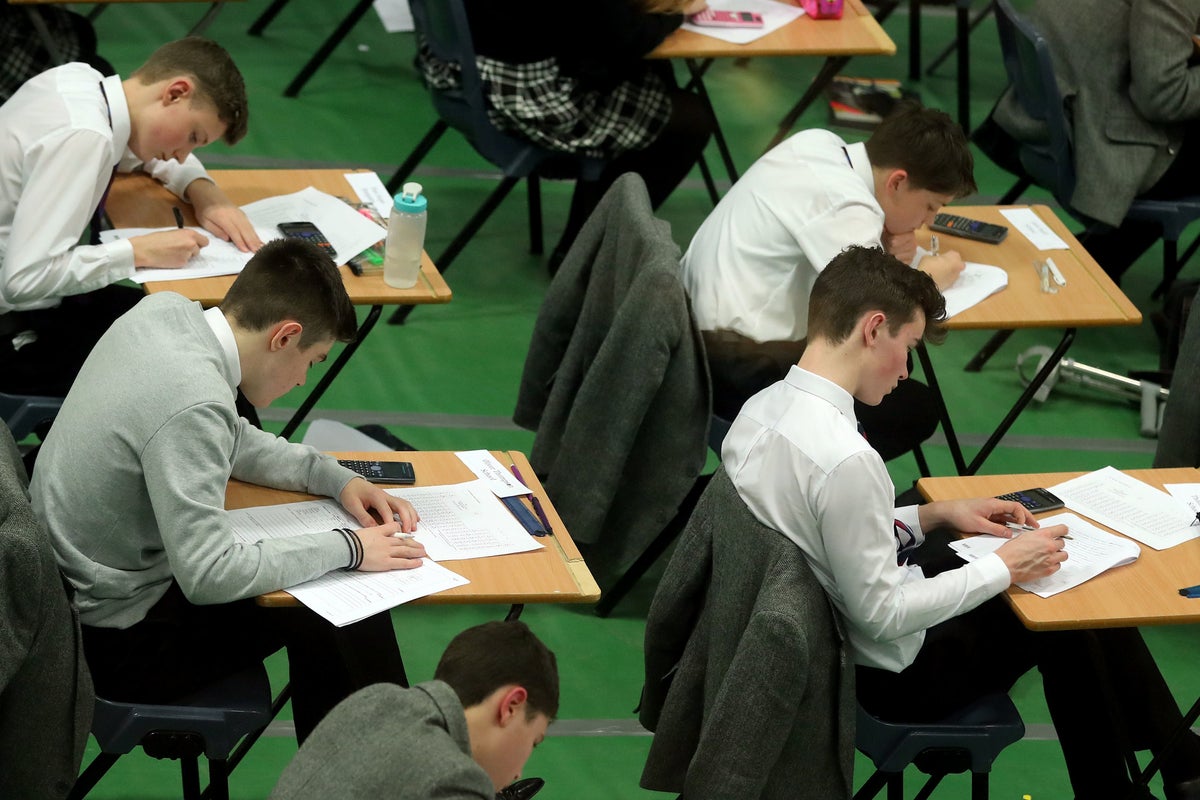
As the language exams of thousands of GCSE students roll out this week, including in Portuguese, Polish, Biblical Hebrew, Urdu and Bengali, there is one group who will not be sitting an oral exam in their native tongue. Romanians, because it does not exist.
What began as a heckle at a Q&A session in London’s Romanian consulate has now become an all-consuming quest. Why on earth doesn’t the second most spoken foreign language in the UK have GCSE accreditation? The omission is eye-catching and begs the question: How does a language make the grade to become a GCSE?
Romanian is romance language – outstanding etymological proof of the Roman empire’s eastern reaches – but neither the numerical superiority of its native speakers nor its exquisite Latin roots (an ideal shortcut to other European languages) has convinced an exam board to take it on.
The impact of this resistance is profound. Ana-Erika Tudor is 16 years old and under pressure. This summer, she is juggling seven GCSEs alongside her life as a professional Latin and ballroom dancer. Thankfully, these days there is a GCSE in Dance. “I have been dancing since I was a child. It comes naturally to me. Like I’ve been speaking Romanian all my life, but I can’t do an exam in that.”
So incensed that her own language is not accredited at GCSE level, Ana-Erika is travelling from Northampton to speak truth to power in Westminster on Monday 27 April. “It is part of my identity. I came to Britain when I was six; I spoke fluent English within four months. But I want a chance to show I can speak Romanian too.”
What a difference a GCSE would make in an undervalued community where parents and children all too often feel pressured to hide their identity and reject their beautiful language
Despite the pressures on her young life, Ana-Erika is still fluent in her native tongue, but increasingly she is the exception, not the rule. “A lot of my Romanian friends dump their language – the fact there is no GCSE makes us children think it’s not important.”
According to Dr Catherine Ames, head of Modern Languages at London’s Grey Coat Hospital School, students from certain cultures “feel they need to assimilate more quickly and hide their identity”. She explains the absence of GCSE accreditation exacerbates this problem, with the availability of an exam conferring all-important “status and value”.
The political right (most recently Matt Goodwin in his derided book Suicide of a Nation) bemoan the arrival of children in Britain who speak no English, but the real tragedy is children who can’t speak to the grandparents they left behind or return to work in their native country because our society (and exam system) has belittled and marginalised their culture so effectively.
Naively, I believed that the failure to deliver a Romanian GCSE for our 1 million-plus diaspora was an oversight. That somehow the (biddable) Romanian establishment had failed to make the case for their population at the highest levels – after all, the better-organised Central European Poles have had a GCSE for decades (Polish being the first most spoken foreign language). Certainly, a challenging communist past, coupled with a migrant population that is disproportionately maligned in our tabloid press, has impinged on Romanians’ willingness to stand up for what is rightfully theirs. But surely it was nothing that couldn’t be solved with a strong call-to-arms on social media?
The response via a few Facebook posts in Romanian has been overwhelming and humbling; the need is enormous as Caleb Dodd, subject leader of PSHE and Citizenship at Leeds Co-op Academy, explains: “This week the speaking exams are starting, and we have multiple children sitting exams in Polish, Urdu, Arabic and Italian. The Romanian pupils are left out.”
His school is in a poor area of the city where the “difference between our Romanian community and the other national communities is that the latter are recognised for their ability to speak another language, which makes them feel successful, and as teachers we know that confidence builds success”.
What a difference a GCSE would make in an undervalued community where parents and children all too often feel pressured to hide their identity and reject their beautiful language. (Ask any adult who cannot speak what should be their mother tongue – it’s a regret for life.)
Small wonder then that in the last few weeks, hundreds of Romanians have emailed their MPs (who would do well to take note – most Romanians can vote in the local elections on 7 May). I am hopeful that our GCSE event on Monday will be well attended, but I fear it won’t be enough.
The more I’ve dug into the weeds of our exam system, the more dispirited I’ve become. When pressed on a Romanian GCSE, the Department for Education referred to “strengthening the primary language curriculum”, a phraseology that confers “secondary status” on a language taught at UCL and Cambridge and reinforces Britain’s long history of diminishing certain Eastern European cultures.
But even if Bridget Phillipson, the education secretary, approves a GCSE for Britain’s second foreign language, England’s four exam boards are under no obligation to accept a Romanian GCSE. Since they are private bodies with a charitable status, I was surprised to discover that the state cannot compel an exam board to offer a particular subject. Both British Sign Language and Ukrainian have been approved at the government level, but still, there is no GCSE – Ukrainians often take a Russian GCSE instead.
There is compelling evidence of Romanian pupils’ urgent need, but at best the answer to our campaign’s demand is a caveated “no”. AQA suggested they would require a guaranteed “initial entry of around 5,000 students”. How does one confirm entry numbers for a product that does not exist? And, more pertinently, are there 5,000 students each year taking AQA’s Bengali, Punjabi and Italian GCSEs?
Friends in the educational establishment whose children enjoy Portuguese, Hebrew and Greek GCSE options tell me not to worry, that the “exam boards move at a glacial pace”. But flaunting their exam status, it is they who do not need to worry.
In the meantime, around 155,000 Romanian children are in danger of losing their second-language superpower and all the economic, cognitive and cultural benefits that come with it. It doesn’t require a top grade to realise that an obstructive exam status quo is failing one of our largest and all too often unseen migrant communities.
Loading ads...
The Romanian GCSE Campaign Group, Gareth Thomas MP, and the Romanian Embassy welcome all MPs to Boothroyd Room, Portcullis House, Westminster from 17.00, 27 April 2026
لقراءة المقال بالكامل، يرجى الضغط على زر "إقرأ على الموقع الرسمي" أدناه
اقرأ أيضاً