7 أشهر

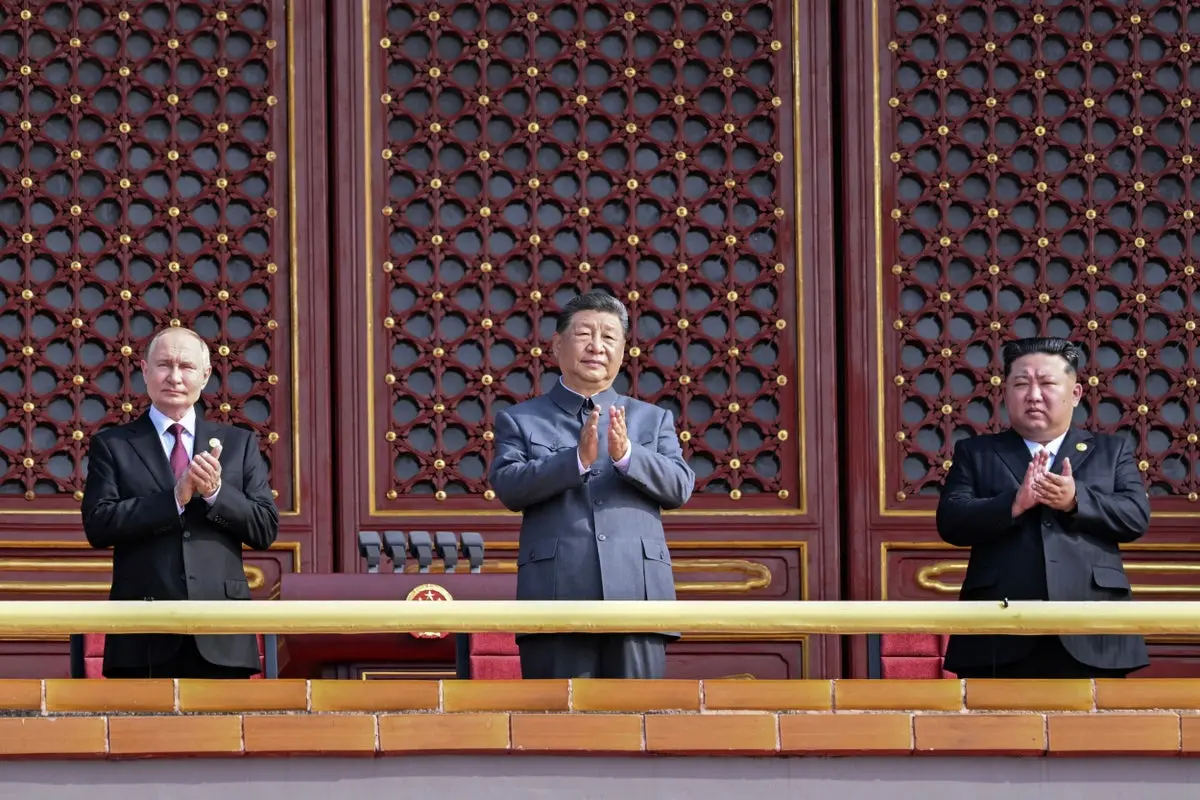
Putin wanted to rebuild Russia’s empire. He has ended up as China’s lapdog instead
الأحد، 1 مارس 2026
Loading ads...
It’s been four years of war. Four years of a Russian onslaught to extinguish Ukrainian independence, which Vladimir Putin thought would be over in days. For just over a year of this, I worked as a special adviser to a foreign secretary, with Ukraine as my main brief. And I don’t think it’s quite understood just how far the war has changed the course not just of Ukrainian history, but of Russian history.One of the last things I did in government was to join a visit to the White House, where top British officials sought to get across just how much the Ukrainian army had changed for the better in 18 months. This is exactly what I had a chance to explain to US vice-president JD Vance – whose views on Ukraine, more nuanced than is assumed, are central to US policy.A year and a half ago, the armed forces of Ukraine were a crowd-sourced and volunteer-led mess, making up with courage what they lacked in kit. Not so today. The Ukrainian army is now one of the most deadly, hi-tech fighting forces on earth. A well-trained Ukrainian can now wipe out an entire platoon. Its frontline drones are cutting-edge. It’s not just Britain that is training Ukraine at this point – Ukraine is training us how to fight a drone war.This didn’t happen by itself. When all is said and done, so much comes back to Volodymyr Zelensky. Most of the politicians I met in the job were nothing special. Distracted, often visibly, by social media. Passing shadows to be forgotten not only by history, but by the end of the decade. Zelensky was different. When I was in meetings with him, I saw a man utterly consumed with every aspect of the front, the diplomacy, and the war economy his people depended on. Relentless in what he needed, demanding and pushing for more, he showed a level of concentration and determination for his cause that I’ve rarely seen. Which is why I think he’s one of the few men I’ve ever met that I consider a real hero – perhaps the last in Europe.Zelensky’s historic role – so crucial at the start of the war in saving Ukraine when the Americans were urging him to evacuate; so central now as he dances around Donald Trump – has won Ukraine this chance to harden. What began as a war of movement is now a war of attrition across surreal, net-covered front lines, where drones have changed everything. It is both the First World War with trenches, and something cyberpunk. Sustaining this, Ukraine has a manpower problem. But now, on quite a shocking scale, so does Russia.That’s the point that people miss. Ukraine isn’t up against the USSR, which in the 1980s had the world’s third-biggest population. It’s up against an ageing Russia, with just over twice the UK population. That’s hardly limitless. After 1.2 million Russian casualties – can you imagine Britain losing 600,000 people – you can see this on the battlefield.Along key parts of the front lines, roughly a third of the “Russian” prisoners of war are now found to be recruits from Africa and Bangladesh. Ukraine has recently tipped the scales, where Moscow is losing more men per month than it can recruit, and this is forcing the Kremlin into a desperate search for cannon fodder among the world’s poorest and most desperate people. This is the army – not Zhukov’s Red Army – that is so bogged down.Like so many Western officials, from the leaders right down to our military trainers, I was constantly in touch with Ukrainians while in government. Ukraine is not in Nato, but even if it never gets there formally, our support means it has become incredibly, deeply tied to the European family. When the war ends – and it will end at some point – I believe Ukraine’s integration into the European Union will proceed at pace. The irony is, I doubt you would ever have such an accelerated and intense integration had it not been for the war. Putin was the man who pushed Ukraine decisively towards the West.This same war has pushed Russia decisively east. It’s not just the high-level tie-up between Western finance and Russian roubles that has gone from Mayfair to Saint-Tropez. It’s that China has become the Kremlin’s main patron. And the price has not just been steep economically, with extensive oil and gas deals on painful Chinese terms. Russia has also paid a political price, which is the increasing influence of China in its domestic politics, with China’s president Xi Jinping known to favour certain ministers. How long before the Chinese are directly picking them? It’s a painful irony for Russia that a war launched to revive an empire has actually accelerated its becoming an imperial subordinate. And the geopolitics of that are something we are going to be living with for the rest of our lives.Ben Judah was special adviser to David Lammy as both foreign secretary and deputy prime minister (2024-2026)
لقراءة المقال بالكامل، يرجى الضغط على زر "إقرأ على الموقع الرسمي" أدناه
اقرأ أيضاً