7 أشهر

Starlink blocking Russia’s drones has given ‘enormous’ boost to Ukraine, says general
الأحد، 1 مارس 2026
Loading ads...
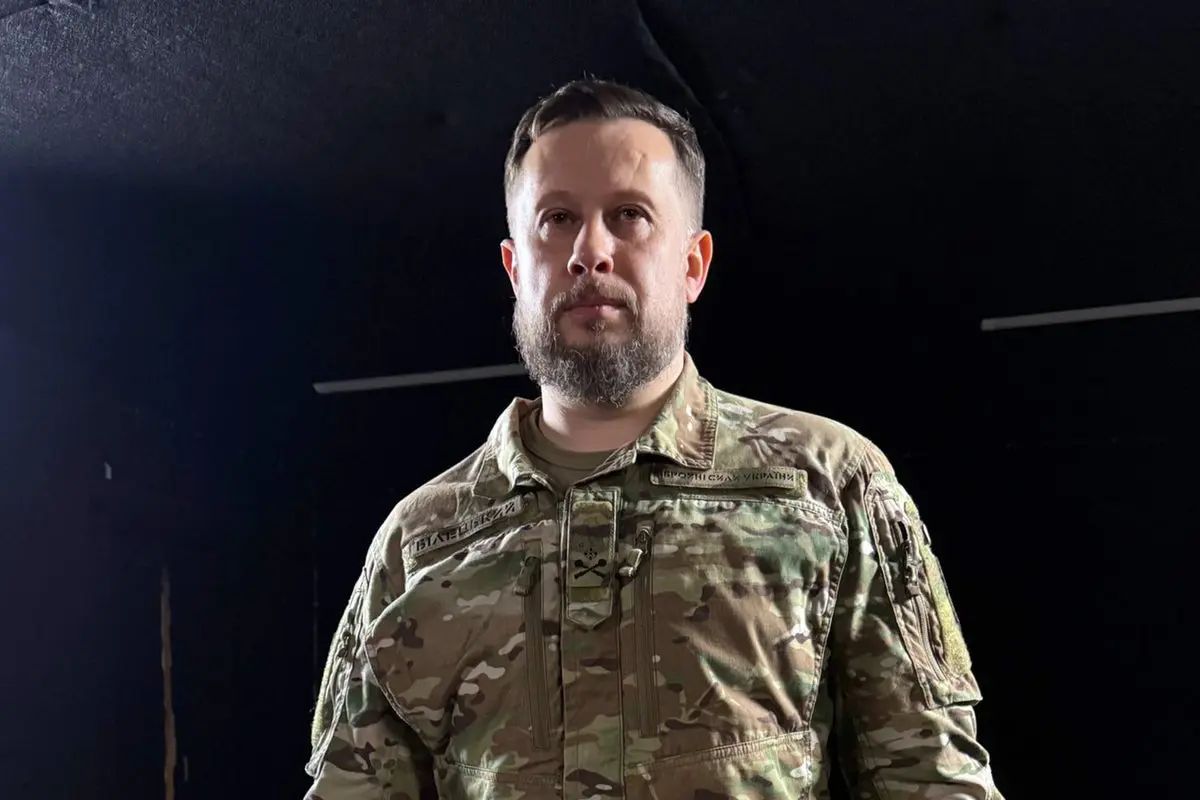
Russia’s drone campaign in Ukraine has been cut by up to 40 per cent, allowing Ukraine to regain territory, after Elon Musk blocked Russia’s access to his Starlink satellite network, according to one of Ukraine’s frontline generals.Brigadier General Andrii Biletski, commander of Ukraine’s 3rd Army Corps, says the impact of SpaceX switching off Starlink in areas of Ukraine now held by Russia’s invading forces has been “enormous”.“After the blocking of Starlink for the Russians, the level of their efficiency compared to ours has sharply decreased, because Starlink is practically irreplaceable as a combat communication system,” he tells The Independent.“Starlink can only be replaced with another Starlink. Therefore, the impact of Starlink on the current course of the war is enormous. In the last two weeks, there has been a significant deterioration in the effectiveness of Russian strikes, by about 20 to 40 per cent.”Biletski, the founder of the Azov Brigade and later of the 3rd Separate Assault Brigade, is a former historian, a right-wing agitator, and a veteran of fighting in Ukraine since Russia’s 2014 invasion. He is now in command of about 12 per cent of the 1,300km front line.His forces are concentrated in several brigades in some of the most violent parts of the front, where drone warfare has changed the nature of conflict into a 15km-wide “kill zone” dominated by drones, where soldiers hide and flit about in a blasted landscape.In recent weeks, Ukraine has recaptured territory around Pokrovsk, north of Lyman, in his area of operations, and south, near Huliaipole, since Russia was denied Starlink access.The small, laptop-sized Starlink units are the backbone of communications on both sides. They are also fitted to larger drones, and to Russian Shahed missiles, and are used for all battle communications on the ground.In Ukraine, SpaceX provided free terminals in the early stages of the defence operation against invading Russians. But although Russia was a quick private adopter of the technology, Ukraine’s ministry of defence now believes Moscow has lost almost every terminal it was using in its operations here.Biletski believes the damage to Russia’s capability may be long-term: “It’s a great opportunity for Ukraine, and I think – this is a subjective opinion – that within a month or two, [Russian forces] will partially regain their efficiency with the help of other means; Russian satellite communications and so on. “But they will never be able to fully restore the level of efficiency they had with Starlink in the foreseeable future. I don’t think we’re even talking about three or five years.”So that’s been a significant strategic blow to the Russians – just that one flick of a switch?“Indeed,” Biletski continues. “Americans have an absolute advantage over any army in the world right now – and that’s Starlink.”He says that if Ukraine also lost its Starlink connection, then “we will be on the same level as the Russians again, as it was three weeks ago”.But the saga of the satellite terminals shows how vulnerable modern armies are to individual systems, and, in a fast-evolving technological war, daily mutations of cheap, relatively lo-tech drones can overwhelm the most expensive conventional equipment used by armed forces.Ukrainian drone pilots, who destroyed Nato forces in a battle exercise last year involving thousands of troops, warn that Russia’s unmanned weapons pose a formidable danger to the West.A small unit of 10 Ukrainian drone operators were able to destroy 17 armoured vehicles, damage another 30, cripple the capacity of an attacking division, and even deliver humanitarian assistance. They were fresh from the real front line. For them, routing Nato forces was a breeze.One of the pilots, Mykola (call sign “Nick”), from 412th Nemesis Brigade, says he was “surprised” that Nato forces did not appear to have studied the war in Ukraine, which has evolved into a drone conflict in which large assaults by armoured groups have ended.“Massive armoured vehicle assaults do not work any more,” he says. “Because now there is a kill zone that is growing. And the quantity of the different kinds of UAVs in the sky – half of them just working to find the target, half of them going after the target – means there is a very fast reaction time between being seen and being destroyed.”The 2025 exercise, Operation Hedgehog, was intended to reveal the extent to which Nato would need to change its tactics, senior officers said. “This was a Nato-led and organised exercise, set up to allow us to experience lessons from a drone- experienced army to enable us to learn fast and adapt,” one general, a former Nato commander, explains. “So a success – not some disaster for Nato that shocked us. Nato knows it needs to develop fast on drones.”Russia is also learning in real time on the battlefield. This puts pressure on Nato defence doctrine, as the rapid expansion of arms-buying has been hindered by the breakneck evolution of modern weapons.Some of the roles of helicopters and fighter-bomber aircraft are now being carried out by drones, which cost far less.“It changes every month. Every month we find something new, and start using it effectively. After a month, they find something to defend against this technology. And all the time, the kill zone is growing, and the quantity of different UAVs is going up,” warns Mykola.He is currently fighting near Pokrovsk, the scene of Russia’s hardest push. Here, the “kill zone” is up to 20km deep – a place where human beings cower for survival under a drone-filled sky.Medical evacuations have been almost impossible, and force the use of remote-controlled ground drones. Infantry, hiding in bunkers, are resupplied from the air by “heavy” bomber drones dropping around 10kg of water, food, batteries and ammunition – the barest essentials for life.Sudden shifts in technology can have an immediate effect. The key is how fast one system can be replaced with another. Ukraine is already backing up its own communications in case Starlink is cut.Alongside European allies, Ukraine is also setting up alternative satellite intelligence feeds, amid fears that the US may cut them off if the so-called peace talks with Russia break down. And close to the battlefield on the eastern front, drone operators hunker down in workshops where they modify, repair, and update their equipment daily.Many are sent by European arms manufacturers for testing. None, they say, are as useful as Ukraine’s products, which are cheaper and more plentiful – mostly, they explain, because the motive for arms manufacturing in Europe is money, not national defence.“Here we could be struck with Russian missiles any minute. Or with deep strike drones, or even middle-range drones, or with aviation bombs. We’re pretty close to the front line,” says a man called Eugene.He was “bought” from another Ukrainian unit for a pickup truck – traded like a football player – because he’s a premier division UAV engineer.Is being close to the front important?“Yeah, because we don’t have a lot of drones, so we have to quickly repair them, adopt, modify, and we have to stay in constant communication with units that do all the fighting,” he says.“We go to them ourselves. We are constantly trying to understand how we’re using our drones, what do we need. Now it’s going to be a change in season that will bring a whole lot of new difficulties.”
لقراءة المقال بالكامل، يرجى الضغط على زر "إقرأ على الموقع الرسمي" أدناه
اقرأ أيضاً