2 ساعات

Meet the ‘Hating Women’ writer whose memoir reveals lessons about men and loneliness
الثلاثاء، 22 سبتمبر 2026
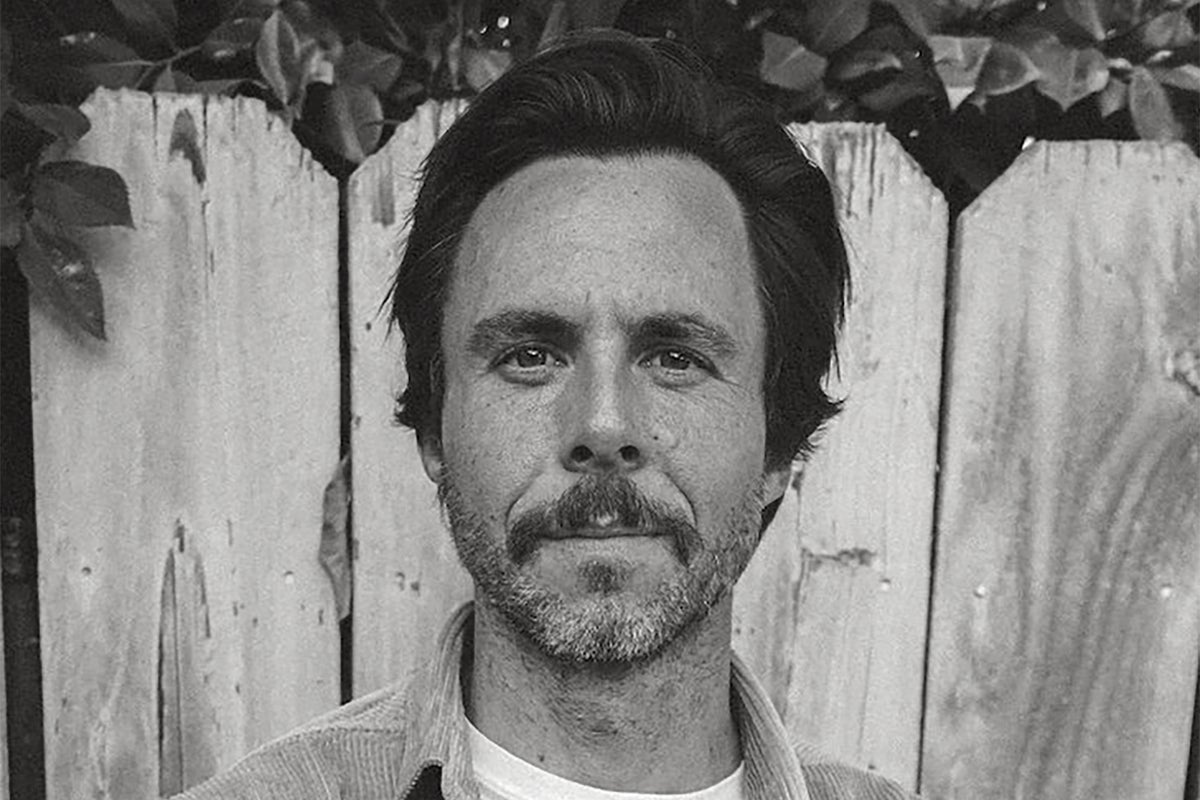
I expected not to like Sean Hotchkiss. This is not entirely his fault. It’s mostly the fault of Hating Women, the title of Hotchkiss’s memoir, which arrives before he does, reeking of the promise of poisonous invective.
The book’s subtitle – A Memoir of Male Rage and Recovery – does little to soften the impact. One might reasonably imagine a descent into the sordid depths of contemporary misogyny: the world of incels, manosphere influencers like the loathsome Andrew Tate, and the toxic online culture he and his kind have created in which resentment of women has been turned into an ideology.
But this isn’t the book Hotchkiss has written. What I find instead is a candid, sometimes uncomfortable memoir about a damaged young man who spent years desperately seeking validation from women while simultaneously being terrified of intimacy with them. Hotchkiss, now in his early forties, documents his own addiction, promiscuity, dishonesty, emotional manipulation and plenty of other toxic behaviours of which he is now deeply ashamed, but what I struggle to find is hatred.
Today, the author is a men’s coach, but for years worked for magazines like GQ, Esquire and Men’s Health in the US. He admits Hating Women was not his title at all. His editor suggested it and his initial reaction was visceral: “I remember kind of throwing a mini tantrum.”
Eventually, Hotchkiss decided his discomfort might be telling him something, and he was forced to interrogate an anger towards women he had not fully acknowledged. But the ambivalence to the title still remains. “I felt major resistance to it,” he says. “And honestly, sometimes I still do.”
This is telling because the central tension of Hating Women is not merely semantic. Hotchkiss’s life was profoundly shaped by the death of his father, who died by suicide when Sean was 22. In fact, the author considers himself to have lost his father twice: first when his parents divorced when he was four, and then, finally, through suicide. “The only thing that I could think to do to survive in that moment was to go to a woman to take away that pain from me,” he explains.
He recounts how endless hook-ups with women increasingly became a form of anaesthetic. He was young, successful, living in New York and, following his father’s death, financially comfortable. Hotchkiss writes about moving between relationships while avoiding genuine closeness. “I was with different women all the time. But I was terrified of being close to anyone.”
I was with different women all the time. But I was terrified of being close to anyone
This, to me, is the central message of the book. Not hating women, but needing them. I tell him that I found dependency, dishonesty, abandonment anxiety and an overwhelming need to be validated by the women in his life, but little resembling actual hatred. “The real hatred in this book is the hatred I had for myself,” he acknowledges. Later, he goes further: “I don’t know if I really ever hated women. I definitely hated what happened to me when I was close to them.”
At a point, Sean’s story morphs into an overarching theory about men. A linguistic shift in the book from “I” to “we” accompanies this questionable transition from the specifics of one man’s history to broader assertions about male emotional development, father wounds, the effect of pornography and vulnerability, and what these mean for our relationships with women.
Hotchkiss argues his confidence in making these connections grew after he began coaching men in 2019. He says he recognised versions of himself in many of his clients. But there is an obvious problem of selection bias here. Surely, men who employ a men’s coach or attend therapeutic retreats are disproportionately likely to believe something in their lives requires fixing? “It could,” he agrees, and accepts that “lots of men out there” are doing perfectly well in their relationships.
This willingness to concede ground gradually dismantles the version of Hotchkiss I’d constructed from the provocative and, frankly, obnoxious title of his book. I remain unconvinced by his insistence that essentially all men carry what he calls a “father wound”. Hotchkiss’s own wound is scarcely comparable to the quiet paternal disappointment many men might feel about their dads. His father was an orphan; his parents divorced when Sean was four; his father later took his own life. That is trauma writ large.
Yet Hotchkiss firmly believes most men do nevertheless carry a hunger for greater acknowledgement, connection or emotional availability from their fathers. Perhaps, but there is also a risk in transforming one unusually traumatic childhood into a psychological template for 50 per cent of the human population.
He experimented with therapy, men’s groups, retreats, coaching, somatic work and even a vision quest in the mountains – often many times over
The same problem exists with the book’s claim to offer men a “road map” towards recovery. Hotchkiss’s own journey is staggeringly extensive. His first breakdown came before the heady GQ years, after his father’s suicide and the collapse of the relationship he had clung to for security. He went to rehab at a Caribbean facility owned by Eric Clapton, no less, but his alcohol and drug addiction merely exposed another dependency: “Women became that new drug for me.”
The deeper recovery – confronting the grief over a father he had been unable to ask for help – would take years. He experimented with therapy, men’s groups, retreats, coaching, somatic work and even a vision quest in the mountains – often many times over. In his own words, he effectively became addicted to recovery itself. “My recovery journey was just as exciting as my drug and party days,” he admits. Eventually he had to tell himself, “Okay, you’re done.”
This leads to further uncomfortable questions. There is now a booming industry around what Hotchkiss and many others categorise as “men’s work”; “work” many men simply cannot afford. When I ask whether he has ever calculated what his recovery has cost him in financial terms, Hotchkiss is admirably concise: “No, but it’s a lot.” Currently on a sabbatical from coaching, he reveals his own rates have ranged from $300 for a “one-off clarity session” to upwards of $40,000 for a year-long package that includes in-person work.
What, then, does his “road map” offer the partner, husband or father working long hours, paying a mortgage and raising children without the money or time for the decade-long therapeutic odyssey he embarked on?
Hotchkiss doesn’t have children but argues some of the best men’s groups he has attended cost nothing. For three and a half years, he met six friends every Wednesday evening. They sat in a park and talked. “It was just the camaraderie,” he says.
Strip away the language of healing and the questions you might have about what this booming wellness industry is really doing for men, and a simpler truth emerges: male loneliness is not necessarily the same thing as a man being physically alone. Men can play sport together, drink together and be in large groups of friends without knowing very much about what is actually happening inside one another.
Hotchkiss insists men have “a hunger for that type of connection”, but the closest they get is often “a drunken hug from a buddy after going to the pub”. Men need other men with whom they can talk honestly. The point of the men’s group is not another male social club, but somewhere to admit fear, grief, failure and uncertainty, rather than expecting a wife or girlfriend to shoulder the burden. For Hotchkiss, the single most important part of his recovery was spending time with other men: peers, older mentors and, in time, younger men he could mentor himself.
Equally significant, he insists, was hearing women talk candidly about their own lives and toxic relationships. His response was often one of mortifying recognition: “I did that, I did that, I did that.”
There is lots to like in this willingness to hold up a mirror to himself
The most meaningful evidence of recovery, he believes, is not how much therapy someone has had but how they behave in their closest relationships. “How is your temper?” he asks. “What are your triggers like?” Healing, in other words, is measurable not in revelations but in the ability to be patient.
There is lots to like in this willingness to hold up a mirror to himself. The younger Hotchkiss could not be honest with women because he was terrified they would leave. The older man, he explains, spent the six months after delivering the manuscript to his publishers “basically in solitude”.
During his time on his own, Hotchkiss discovered he “could be alone and happy”, which, he says, means he is “no longer reliant on [women] for stability”. He is currently in a relationship that he says “feels different, wonderful, and scary all at once”.
By the end of our conversation, I ask what his memoir was called before his editor rechristened it? “Heart on the Run”, he replies. He thought it “sounded like a Bruce Springsteen song”. Less marketable and certainly less provocative, but it would have at least made for a book cover you might feel more comfortable reading in bed next to the woman in your life.
I also think it would have made for a more accurate description of the author’s story. “I’m a big-hearted guy,” Hotchkiss concedes. “I've been on the run from this pain for a long time and this book is me facing the pain.”
‘Hating Women: A Memoir of Male Rage and Recovery’ by Sean Hotchkiss (Simon & Schuster) is out 27 August
If you are experiencing feelings of distress, or are struggling to cope, you can speak to the Samaritans, in confidence, on 116 123 (UK and ROI) or visit the Samaritans website to find details of your nearest branch.
Loading ads...
If you are based in the USA, and you or someone you know needs mental health assistance right now, call or text 988, or visit 988lifeline.org to access online chat from the 988 Suicide and Crisis Lifeline. This is a free, confidential crisis hotline that is available to everyone 24 hours a day, seven days a week. If you are in another country, you can go to www.befrienders.org to find a helpline near you
لقراءة المقال بالكامل، يرجى الضغط على زر "إقرأ على الموقع الرسمي" أدناه
اقرأ أيضاً