4 أشهر

Billionaires are putting AI in space. It could be dangerous
الإثنين، 11 مايو 2026
Artificial intelligence might often seem abstract, but its biggest problems are all physical. Questions of how to make enough computer chips to actually do the work required, where to put them when they’re made, and how to power and cool them once they are in place. But, in recent months, some experts feel they might have found the answer to those difficult questions – in space.
There is, at least on the face of it, plenty of space there. And plenty of energy, too, given that the sun is shining all the time, as well as a number of ways of cooling down the chips when they use up that energy. It could be just the place we need as we search for new areas to house the equipment required for our AI-powered future.
But space comes with its own concerns, too. Getting there is notoriously hard. And our rush to use the opportunities offered by low-Earth orbit – not just for AI, but also for internet communications such as Elon Musk’s Starlink, run by SpaceX – means that we could be facing whole new kinds of dangers.
Earlier this month, Nvidia announced that it was launching “space computing”, a new plan to put AI in orbit. To do so, it had built the “Space-1 Vera Rubin Module”, hardware specifically made for space. It is specifically built to live on an “orbital data centre”, or ODC, which is just like those vast warehouses of computers on Earth.
“Space computing, the final frontier, has arrived. As we deploy satellite constellations and explore deeper into space, intelligence must live wherever data is generated,” said Jensen Huang, founder and CEO of Nvidia, in a statement.
Some of that work is for the relatively simple job of having AI in space, doing space operations. By making satellites autonomous, for instance, they are able to act more quickly and need less input from engineers on Earth. That might include allowing the satellites that currently photograph the Earth to process the data they gather themselves, meaning that they don’t need to stay in constant and potentially slow or unreliable contact with Earth, as well as allowing them to work with their data in real time.
Nvidia offered a host of ways that might work. It would allow us to better respond to disasters and environmental changes, for instance, by using AI to immediately spot things such as wildfires or oil spills; better weather prediction, by allowing satellites to do their own work; and monitoring critical infrastructure such as transport networks from above.
Having satellites be more intelligent could also allow them to work better, too. The European Space Agency and other organisations have been funding work to put AI into satellites so they can improve the images they take, as well as better control their orientation and direction in space.
But not all of that work happening in space is for space. Those pushing AI into space hope that it could one day become useful to those of us still down on Earth, too.
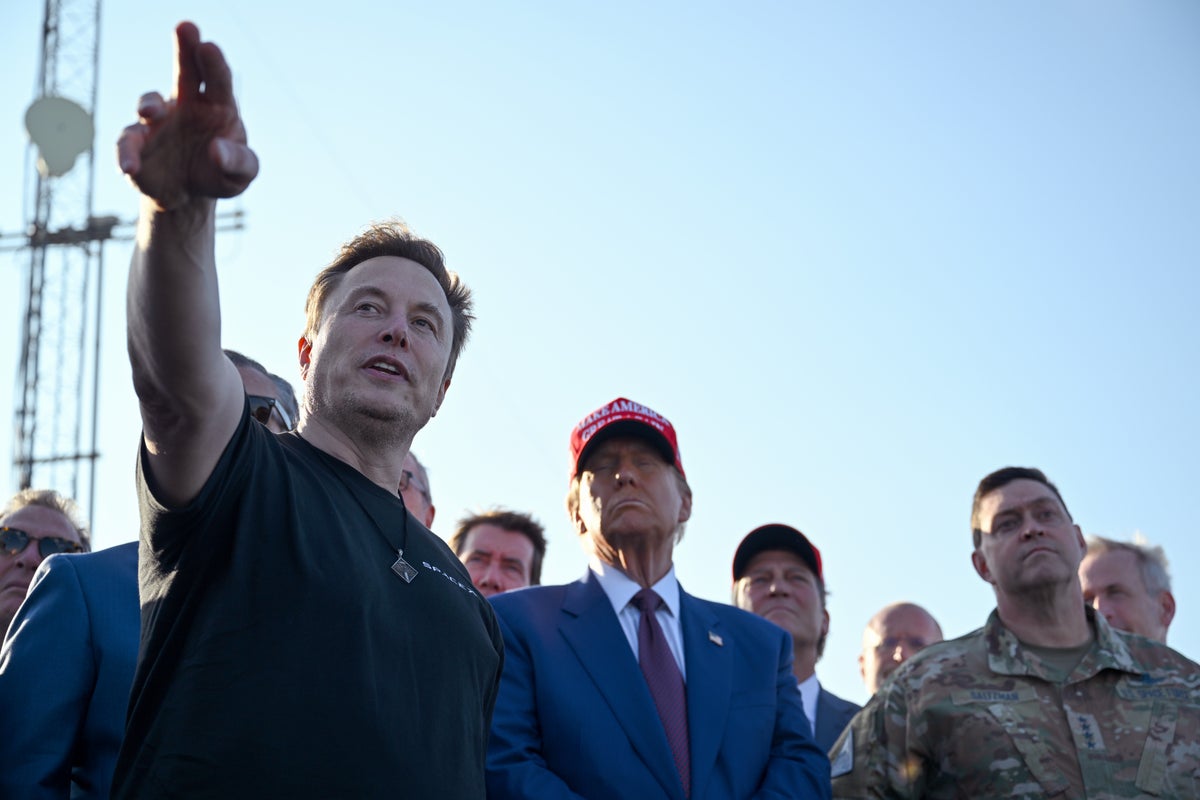
That is the plan offered by Musk, who has also shown off his own plans for ODCs to be launched by SpaceX and to power his plans for xAI, two of his operations that have recently been merged under one company.
Musk’s proposed satellites are huge. This month, he showed plans for huge data centres, and though he was imprecise about their actual size he indicated that they would be longer than the 125 metres of the Starship rocket. Most of their vast size is made up of huge solar panels to power them. Those are only “mini” versions, he suggested, leaving the possibility of even bigger ones.
The SpaceX boss has a track record of promising sci-fi futures that don’t arrive on the promised time scale. But he said he was “confident this is feasible”. “No new physics, or impossible things are required to get there,” he said.
One trouble however might be that there isn’t all that much space left in space. Experts are already concerned about the vast amount of objects in low-Earth orbit, and the way that they could crash into each other as well as block out our view of the sky. Avoiding that has spawned an entire industry of “space traffic management”.
If all of this goes wrong, it could be disastrous. In 1978, Nasa scientists proposed the eponymous Kessler syndrome, a scenario where there are so many satellites in space that they collide with each other, and begin a cascade that could fill the space around Earth with debris that not only destroys existing satellites but makes it impossible to safely launch new ones, or people. That concern has become increasingly real as the number of satellites has exponentially increased, and avoiding it has become more difficult as a larger number of organisations including private companies look to take up more space in space.
Loading ads...
Space, it turns out, is not quite as big as we might think. But that doesn’t seem to be holding back an industry that is desperate for new places to put its computers, as well as new ways to power and cool them. AI is headed into orbit.
لقراءة المقال بالكامل، يرجى الضغط على زر "إقرأ على الموقع الرسمي" أدناه
اقرأ أيضاً